
The Fallacy of Scarcity and The Culture it Creates
Author: Felice Upton | Connect on LinkedIn
Published December 17, 2025
Scarcity is one of the most damaging ideas in leadership culture and in any workplace. I have been thinking about this today as I was speaking to a couple of people this week who either handed me work or I offered them an opportunity, we are all trying to eat... and we can and will succeed WITH one another.
Scarcity tells people there isn’t enough to go around. Not enough credit. Not enough opportunity. Not enough safety. Not enough room to belong and still be fully themselves. It makes people devolve and not be their best selves.
When scarcity becomes the operating system, it quietly reshapes behavior. People compete instead of collaborate. They withhold information. They protect their seat rather than strengthen the table. Success becomes something to guard instead of something to grow.
Over time, scarcity doesn’t just limit outcomes. It corrodes trust.
I’ve seen this play out across systems that are already under pressure. When resources feel tight and accountability is high, leaders are often told that the only way forward is efficiency, control, and tradeoffs. Choose this or that. Support these people but not those. Invest here but expect loss somewhere else.
That framing is a false choice. I am NOT saying the circumstances and hard choices are false. They are not... they are very real. It is how we deal with them that is the differentiator.
Healthy cultures are not built on the belief that only a few can succeed. They are built on the understanding that people do their best work when they feel supported, not threatened.
The most effective leadership tables I’ve been part of share a few things in common. They assume abundance of talent, not scarcity of worth. They invest in people without hidden agendas. They make room for growth rather than forcing competition for relevance. And they understand that when one person rises, the system becomes stronger, not weaker. If one gets a raise, then others will. If one has better hours perhaps all can.
Cultures of support don’t ignore reality. They don’t pretend resources are infinite or that tradeoffs never exist. What they reject is the idea that fear should be the organizing principle.
Instead, they lead with clarity.
Supportive cultures set clear expectations and pair them with real investment. They offer transparency instead of gatekeeping. They celebrate collective wins and name contributions generously. They create space for learning, feedback, and repair, rather than punishment and quiet resentment.
Just as importantly, they pay attention to how people feel at the table.
If success feels conditional. If people are made to choose between belonging and honesty. If growth is treated as a threat instead of a goal.
Those are signs of scarcity at work.
And scarcity, left unchecked will ruin everything including your teams.
The alternative is not naïve optimism. It’s intentional design.
Leaders who build cultures of support ask different questions. What do people need to show up well? Where are we unintentionally pitting people against each other? How do we reward collaboration, not just individual output? How do we make success feel shared instead of scarce?
When leaders shift from guarding power to growing people, something remarkable happens. Trust increases. Performance stabilizes. Burnout decreases. And people stop wasting energy protecting themselves and start investing it in the work.
The truth is simple and often uncomfortable.
If a culture requires people to shrink, compete, or stay afraid in order to function, it is not sustainable. And if you are constantly told that not everyone can succeed, you may be at the wrong table.
The strongest systems I know are built by leaders who believe we can all eat and who design their cultures accordingly.
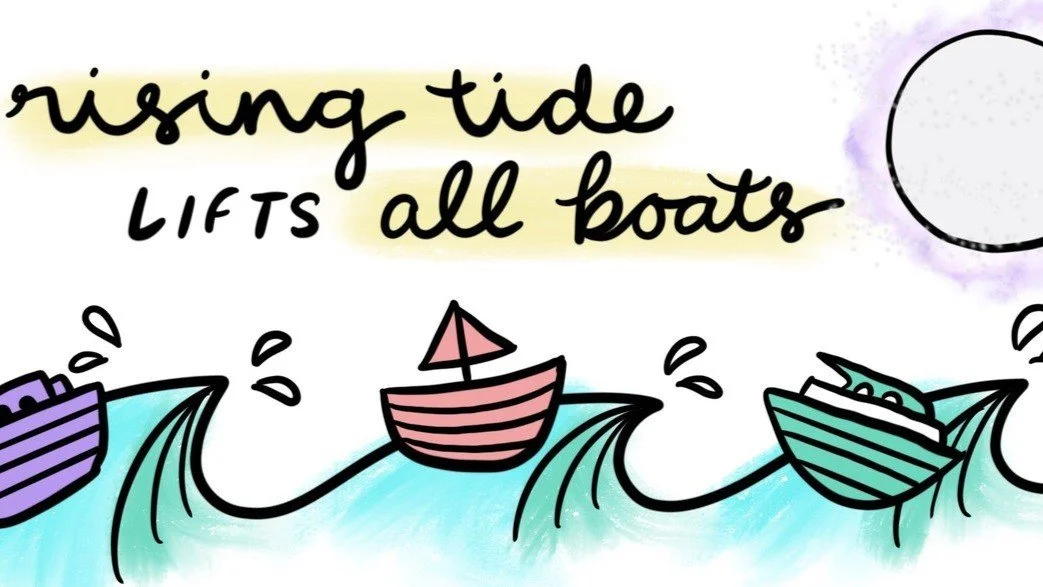
A rising tide does not just carry ships. It tells you who was committed to building the harbor in the first place. Let's find ways to build one another up. It is a magical feeling when you start being surrounded by people who are as committed to your success as you are and maybe believe in you more than you do earlier than you do. We all deserve that.
